Countertop Design for Open-Concept Spaces: How to Create Flow Between Kitchen and Living Areas

June 15, 2026

Open-concept floor plans have become one of the defining features of modern home design. By eliminating the walls that once separated the kitchen from the dining and living areas, homeowners gain a sense of spaciousness, better natural light, and a more social environment where cooking, entertaining, and relaxing happen in one shared space. But this freedom comes with a real design challenge: how do you make a kitchen feel intentional and unified when it opens directly into the rest of the home?


Countertops are often the answer. In open-concept homes, countertop surfaces do far more than provide a workspace. They function as visual anchors, transitional elements, and design statements that either pull a space together or create a jarring disconnect. When chosen with care, the right countertop material, edge profile, color, and layout can establish a natural sense of flow from the kitchen island all the way through to the living room. This blog explores how to approach countertop design specifically for open-concept spaces and what decisions drive the most cohesive, well-considered results.

Understanding Visual Flow in Open-Concept Design

Why Flow Matters More Than You Think

In a traditional closed kitchen, design decisions stay contained. A bold countertop color, a distinctive edge detail, a unique material choice all live within four walls. In an open-concept space, every decision in the kitchen is visible from the living room sofa, the dining table, and often the entryway. This visibility means that countertop selections carry far greater weight.


Visual flow refers to the way the eye moves naturally through a space without stopping on jarring contrasts or awkward transitions. In open-concept design, flow depends on continuity of color temperature, material texture, and design language. A kitchen outfitted in cool gray quartz with sleek, straight lines will feel disconnected from a warm, wood-heavy living room with rounded furniture unless deliberate bridging elements are introduced.

The Role of the Countertop as a Transitional Element

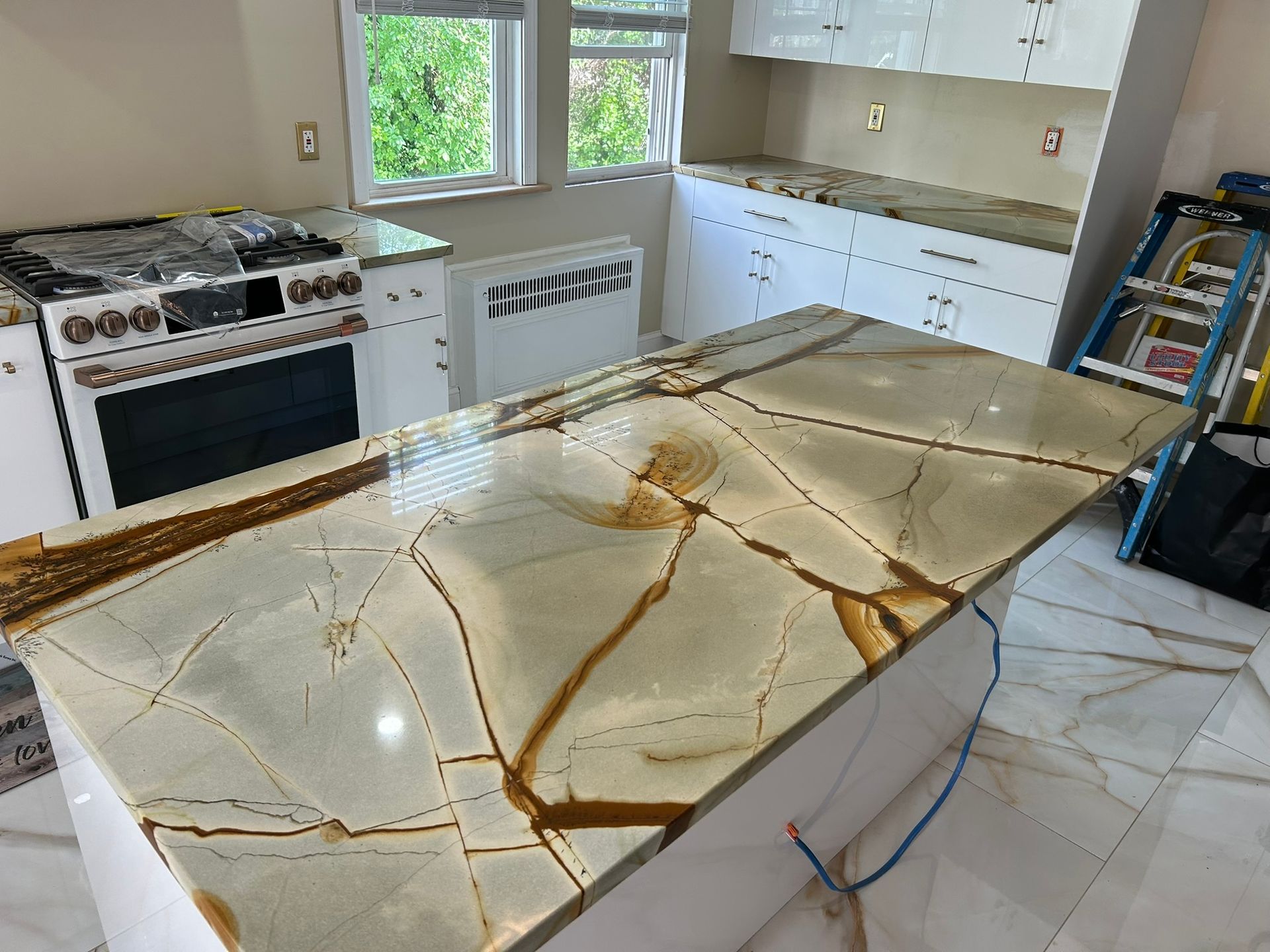
Countertops, especially kitchen islands, sit physically between the kitchen workspace and the open living area. This positioning makes them natural transitional surfaces. When the countertop material picks up on colors or textures found elsewhere in the room, it draws the two spaces into a conversation rather than a competition. A waterfall island in a veined natural stone, for example, creates a sculptural focal point that reads as both functional kitchen element and living room feature, much like a piece of furniture rather than a work surface.

Choosing the Right Material for an Open-Concept Space

Materials That Bridge Kitchen and Living Areas

Not every countertop material suits an open-concept context equally well. The goal is to find a surface that looks at home in both a culinary workspace and a social living environment. Here are materials commonly used in open-concept designs and what they bring to the table:

Material Visual Character Best Suited For
Quartz Uniform, low-veining options available Modern, minimalist, or transitional spaces
Marble High movement, luxurious appearance Traditional, glam, or organic modern styles
Quartzite Natural stone variation with durability Homes with natural or earthy living room palettes
Porcelain Slab Large format, seamless look Contemporary homes with clean lines
Butcher Block Warm, organic texture Rustic, farmhouse, or mixed-material interiors

Matching Material Tone to Room Palette

The countertop does not need to match adjacent living room finishes exactly, but it should belong to the same tonal family. A warm-toned travertine countertop pairs more naturally with warm woods and cream upholstery than with cool slate and charcoal furniture. Before selecting a slab, we recommend bringing samples into the actual space and viewing them in both natural and artificial light to assess how the material reads across the open floor plan.

Color Strategy for a Unified Space

The 60-30-10 Rule Applied to Countertops

Interior designers often apply the 60-30-10 rule to color in open-concept spaces: 60 percent dominant color, 30 percent secondary, and 10 percent accent. Countertops typically fall into the secondary or accent category, meaning they should complement the dominant wall and flooring tones rather than compete with them.


In a space where the floors are a warm greige and the cabinetry is white, a countertop in soft ivory or light taupe maintains visual harmony. Introducing a dramatically dark counter in that same space creates contrast, which works as an intentional design choice only when it is repeated elsewhere in the open area, perhaps in a dark coffee table, dark-framed windows, or accent chairs.

Avoiding the Island-as-Interruption Problem

One of the most common mistakes in open-concept kitchen design is treating the island as an isolated design decision. When the island countertop does not relate visually to the perimeter countertops or to the living space beyond, it becomes an interruption rather than an invitation. To avoid this, we suggest either matching island and perimeter countertop materials exactly or selecting complementary materials from the same color family that still offer visual distinction without creating a clash.

Edge Profiles and Their Role in Spatial Cohesion

How Edge Details Communicate Design Intent

Edge profiles are often an afterthought, but in open-concept spaces where countertops are visible from multiple angles, they carry real design significance. A sharp mitered edge communicates precision and modernity. An ogee or bullnose profile reads as softer and more traditional. The key is consistency with the overall design language of both the kitchen and the living area.


A kitchen island with a waterfall edge and a mitered corner creates a strong architectural statement that suits a contemporary open-concept space where the living room features clean-lined furniture and minimal ornamentation. That same profile would feel out of place in a cottage-style home with rounded archways and antique wood accents.

Thickness as a Visual Statement

Countertop thickness also contributes to the overall feel of a space. Thicker slabs, typically three centimeters or more, project durability and weight, which suits substantial islands in large open-concept rooms. Slimmer profiles feel more refined and are often used in spaces where a lighter, more airy aesthetic is the goal. Waterfall islands in particular benefit from a thicker slab, as the additional visual weight grounds the island as a furniture-like centerpiece.

Layout Considerations for Open-Concept Countertop Design

Island Sizing and Placement

The kitchen island is the single most important countertop decision in an open-concept space. It sits at the intersection of the kitchen and the living area, and its size, shape, and orientation affect traffic flow, sightlines, and the overall spatial balance. Rectangular islands work well in most open-concept plans, as they align with the linear nature of most kitchen layouts. However, in larger, more irregularly shaped spaces, an L-shaped or curved island may serve the flow of movement more naturally.


A general guideline is to maintain at least 42 inches of clearance on all walkable sides of the island. In open-concept homes where the kitchen flows into a dining or living area, this clearance also affects how guests move between zones during gatherings.

Extending Countertops Into the Living Space

One design approach gaining traction in open-concept homes is the extended countertop that moves beyond the kitchen zone and into the transitional or dining area. A slab counter that becomes a breakfast bar or a bar-height ledge on the living room side of the island creates a natural boundary between zones while maintaining visual continuity. This approach works particularly well in studio apartments and smaller open-concept homes where space is limited but a sense of separation between cooking and relaxing is still desirable.

Skilled Countertop Guidance for Every Philadelphia Open-Concept Project

Designing countertops for an open-concept space requires thinking beyond the kitchen. Every material choice, color decision, edge profile, and layout consideration affects how the kitchen reads in relation to the living area. When these decisions are made with the full space in mind, the result is a home that feels unified, intentional, and well-considered from every angle. The countertop is not simply a surface where food gets prepared. In an open-concept home, it is one of the most visible and architecturally significant design elements in the entire living space. Approaching it with that understanding leads to better outcomes and spaces that genuinely feel like they were designed as a whole rather than assembled in parts.


For homeowners in Philadelphia, Pennsylvania who are navigating these decisions, Ideal Stone Inc. brings 15 years of hands-on countertop expertise to every project. We work with a wide selection of natural stone, engineered quartz, porcelain slabs, and specialty materials, and we guide clients through every stage of the selection process, from initial material sampling to final fabrication and installation. Our understanding of how countertops function within open-concept layouts allows us to offer recommendations grounded in both design principles and real-world performance. Whether you are planning a full kitchen renovation or updating an existing island surface, we are here to help you make choices that serve the space for years to come. We invite you to visit our Philadelphia showroom and see our full slab collection in person.

FAQs

  • 1. What countertop material works best for open-concept kitchens?

    Quartz and quartzite are among the most practical options for open-concept kitchens. Quartz offers low maintenance and a wide range of tones, while quartzite delivers the natural variation of stone with better durability than marble. The right choice depends on the existing palette of the broader living space.

  • 2. Should the kitchen island countertop match the perimeter countertops?

    Matching is not required, but the materials should share a tonal relationship. Using the same material creates a cohesive, streamlined look. Using complementary materials can add depth and interest, provided the contrast feels deliberate and is supported by other design choices in the open space.

  • 3. How do I choose a countertop color that works with my living room?

    Start by identifying the dominant tones in the living room, including flooring, wall color, and upholstery. Choose a countertop color that belongs to the same warm or cool tonal family. Bringing physical samples into the space and viewing them against existing finishes is the most reliable method.

  • 4. What edge profile is best for an open-concept island?

    The edge profile should align with the overall design style of the home. Mitered or eased edges suit modern and contemporary spaces. Beveled or bullnose profiles work well in transitional and traditional interiors. Since the island is visible from the living area, the edge detail reads as a design feature, not just a functional finish.

  • 5. Can I use different countertop materials in the same open-concept kitchen?

    Yes, mixed materials are a well-established approach in open-concept design. A common pairing is a natural stone perimeter counter with a butcher block or porcelain island. The key is to ensure that both materials connect through shared undertones or a complementary relationship rather than existing in opposition to each other.

Modern double vanity with two sinks, dark wood drawers, and white marble countertop in a bathroom
May 9, 2026
Choosing the right countertop is one of the most critical decisions in both kitchen and bathroom design, yet many homeowners assume that all countertops serve the same purpose. In reality, bathroom vanity countertops and kitchen countertops are engineered to meet very different functional demands.
April 17, 2026
Designing a functional and visually appealing kitchen requires attention to details that often go unnoticed, and countertop overhang is one of them. While cabinetry, materials, and finishes usually take center stage, the dimensions of a countertop’s overhang play a critical role in usability,
A white rectangular vessel sink sits on a white marble-look countertop above a two-drawer wood vanity with gold handles.
March 21, 2026
Stone countertops have become a hallmark of modern kitchen and bathroom design, admired for their elegance, durability, and timeless appeal. From granite and marble to quartz and soapstone, these surfaces not only elevate the aesthetic of any space but also offer functionality that can withstand daily wear and tear.
White kitchen with black appliances, gray countertop, and gray wood-look flooring.
February 16, 2026
Granite countertops have long been celebrated as a hallmark of elegance and sophistication in both residential and commercial spaces. Their natural beauty, combined with exceptional durability, makes them a sought-after choice for homeowners, designers, and builders alike.
Kitchen countertop installation: White cabinets, gray granite, under-window sink space, unfinished wall with electrical boxes.
January 13, 2026
When it comes to designing or renovating a kitchen, bathroom, or commercial space, countertops play a pivotal role in both functionality and aesthetics. They are more than just surfaces for cooking, working, or displaying items—they serve as a cornerstone of a room's design,
Wooden kitchen with granite countertops, bar stools, and a view of water through sliding doors.
December 22, 2025
Commercial spaces are more than just functional environments—they are a reflection of a brand’s identity, values, and commitment to quality.
Modern kitchen with marble countertops, gold-framed glass cabinets, and a sink. Built-in refrigerator and led lighting.
November 17, 2025
Your home is more than a living space—it’s also an investment. Every design decision you make can either preserve or increase its value, and few upgrades are as impactful as installing luxury countertops.
Modern kitchen with white countertops, a black sink, and wood cabinets.
October 15, 2025
Modern families juggle busy schedules filled with work, school, and activities, which leaves little time for constant home maintenance. Kitchens, being the heart of the home, endure the most wear and tear—spills, scratches, and heavy use are part of everyday life.
Kitchen with white cabinets, a large island, quartz countertop, and blue walls.
September 20, 2025
Upgrading your countertops is one of the most exciting steps in transforming a kitchen or bathroom. Beyond aesthetics, countertops influence durability, functionality, and the overall value of your home. Still, many homeowners aren’t sure what actually happens once they’ve chosen the perfect material.
Show More