
Picking a Slab in Person vs. From a Sample: Why the Whole Slab Matters

September 14, 2026

Quick Answer: A showroom sample is a small chip, chosen because it shows the best-looking corner of a stone variety, not the specific piece that will end up on your counters. Natural granite, marble, and quartzite form under conditions that shift across a quarry, so two slabs carrying the same trade name can differ noticeably in background tone, mineral density, and vein movement. Walking the yard and choosing your own numbered slab, ideally viewed flat and under natural light, is the only way to know exactly what will be cut for your kitchen before the saw ever touches it.


You picked a stone off a sample board, a two-foot square of granite or marble bolted to a display wall in a showroom, and it looked exactly right. Warm background, subtle veining, a little movement without being busy. Weeks later your fabricator calls to say the slab is in and ready for templating, and when you finally see it, something feels off. Maybe the background reads cooler than you remembered, maybe the veining is denser in one corner and nearly absent in another, or maybe the whole thing just looks like a different stone than the one you fell for. This happens often enough in the trade that it has a name among fabricators: sample shock. It is almost never a mistake on anyone's part. It is simply what happens when you buy natural material based on a fragment instead of the whole piece.

Why a Sample Chip Can't Tell You What You're Getting

A sample chip does its job well for one purpose: showing you the general character of a stone variety, its color family, its typical vein style, whether it leans warm or cool. What it cannot do is show you the specific slab that will be cut for your job. Stone distributors keep sample boards stocked with pieces chosen because they represent the variety attractively, often cut from a particularly clean section of a particularly good block. The actual inventory sitting in the yard spans a much wider range, because that is simply how the material formed.


Granite gets its color from the relative mix of feldspar, quartz, and dark minerals like biotite or hornblende locked into the rock as it cooled. That mix is not constant across a quarry. A block pulled from one part of the deposit might run heavier in pink feldspar, while a block from thirty feet away in the same quarry carries more quartz and reads noticeably lighter and grayer. Both are correctly sold under the same name. Marble works similarly but through a different mechanism: iron oxide, graphite, and other trace minerals migrated irregularly into the original limestone during metamorphism, which is why veining density in something like Calacatta can swing from faint and sparse on one slab to bold and sweeping on the next, even from the same production run. None of that variation shows up on a sample the size of a dinner plate.


Lighting compounds the problem. Showroom displays are usually lit warm and flattering, sometimes with directional accent lighting angled specifically to make the stone pop. Bring that same chip home and hold it under your kitchen's north-facing window or cool LED under-cabinet lighting, and the undertone can shift enough that you'd swear it was a different piece of stone. Photography adds a third layer of distortion. Slab images on a distributor's website are professionally lit and processed to look their best online, which means the saturation and contrast you see on a screen rarely survives contact with your actual kitchen.

What Changes When You See the Whole Slab

Standing in front of a full slab, typically running somewhere around nine feet by five feet depending on the material, tells you things a sample simply cannot. You can see how the veining actually moves across the piece rather than guessing from a fragment. You can see whether the background color is consistent from one end to the other or shifts gradually, which happens more than people expect with natural stone. You can spot inclusions, fissures, or color pooling that a fabricator will need to work around when planning your cuts.


Most stone yards store slabs upright on A-frame racks for browsing, which is useful for narrowing down options but compresses your sense of the true color, since vertical viewing under warehouse lighting reads differently than the same stone lying flat under your kitchen's fixtures. Once you've shortlisted a slab, it is worth asking the yard to lay it flat, or at least tilt it toward horizontal, so you're judging it closer to how it will actually sit as a countertop. Wetting the surface with a spray bottle helps too. A dry slab in a yard often looks dusty and muted compared to how the same stone looks sealed and installed, and a quick wipe with water gives you a much closer preview of the finished color depth, particularly on darker granites and quartzites where the dry surface can look almost gray until it's wet.

Tip: Bring a small spray bottle of water with you, or ask the yard if you can borrow one, and wet each finalist slab before making your final call. The difference between a dry read and a wet read is often the single biggest gap between what people expect at the yard and what they see once the counter is sealed and installed.

Reading the Slab Tag

Every slab in a reputable yard carries a tag with a lot number and often a bundle or block number. That number is more useful than it looks. Slabs cut from the same block, sometimes called a book-match pair when they're consecutive, will carry the closest possible resemblance to each other in both color and vein pattern. If your kitchen needs more than one slab, whether for an island plus perimeter or a long run that exceeds a single slab's length, asking the yard to pull additional pieces from that same lot number gives you a far better shot at a clean-looking transition than grabbing a second slab of the "same" stone from a different shipment.


This matters even more for phased projects. If you're doing the kitchen now and planning a matching bathroom vanity or a bar top down the road, buying all the stone you'll need in one visit, even if fabrication happens in stages, is the most reliable way to guarantee a match. Quarry output shifts over time. A granite or quartzite variety carrying the same trade name today may come from a different block, or even a different section of the mountain, than the batch a distributor sold two years ago. Come back later hoping to match what's already installed and you're relying on luck rather than planning. Ask your fabricator to set aside a remnant from your original slab as well. A saved offcut, even a small one, becomes the single best reference for any future repair or addition, since it came from the exact piece already in your home.

Quartz Plays by Different Rules

Not every material carries this same risk, and it's worth understanding why before you decide how much weight to put on the in-person viewing step. Engineered quartz is manufactured, not quarried, which means color and pattern are controlled during production rather than shaped by geology. A quartz sample chip is a reliable preview of what you'll receive, since batch-to-batch consistency is one of the material's defining features. That's part of why quartz has become the default choice for homeowners who want predictability above all else.


Natural stone trades some of that predictability for the fact that no two pieces are identical, which is exactly what draws people to granite, marble, and quartzite in the first place. If uniformity matters more to you than one-of-a-kind character, that preference is worth naming honestly before you start slab shopping, because it changes how much time you need to spend at the yard and how much scrutiny each candidate slab deserves.

Working Remotely When You Can't Visit the Yard

Not every homeowner can make it to a stone yard in person, whether because of distance, scheduling, or simply preferring to handle selection digitally. If that's your situation, the same principles still apply, just translated to photos and video. Ask for full, well-lit images of the entire slab rather than a cropped corner, ideally taken in daylight rather than under the yard's interior lighting. Request the lot and bundle number so your fabricator can confirm what's actually being held for you, and ask whether the yard offers a live video walkthrough, since a short call where someone walks the slab with a phone camera tells you far more than a handful of still photos ever will.

Warning: Never approve a slab sight unseen based only on a small cropped photo or a stock image tied to the stone's name rather than the actual piece in inventory. A photo that shows a corner instead of the full slab hides the same problems a showroom sample does, and by the time the discrepancy shows up at templating, that slab has often already been cut into and can't be returned to inventory.

What Happens After You Choose

Once you've selected a slab and it's tagged and held for your project, the process moves into templating, where your fabricator measures your actual cabinets, walls, and cutout locations, then plans exactly where each cut will fall on the slab you chose. This is the point where seam placement, sink and cooktop cutouts, and any bookmatching decisions get finalized against the real piece of stone rather than a rendering. A fabricator who has already walked you through your specific slab has a much easier time explaining those layout decisions, because you're both looking at the same material rather than one person picturing a sample and the other looking at nine feet of actual rock.

  • Is it safe to mount a TV over a fireplace?

    Yes, with the right precautions. Heat off the firebox, wall structure, and viewing angle all need checking first. A gas or electric unit with managed heat can run for years. Wood-burning fireplaces with no heat plan cause trouble.

  • How far above the fireplace should the TV be mounted?

    A common range is 8 to 12 inches between mantel top and screen bottom, though it shifts with your fireplace and wall height. The hotter the unit, the more clearance you want, keeping the screen above rising heat.

  • Can the heat from my fireplace really damage a TV?

    It can, usually slowly. Most sets are rated up to 100-104 degrees, and unmanaged fireplace walls can climb past that. Over time this shows as dead pixels, a warped bezel, or shutdowns. Managing heat prevents it.

  • Do I need a special mount for a TV over a fireplace?

    Most of the time, yes. A fixed mount aims the screen over your head. A tilting mount angles down toward viewers; full-motion arms pull out and down. The right choice depends on screen size and wall height.

  • Can I hide the wires if my fireplace is brick or stone?

    It's harder than drywall but doable. Masonry rarely has an open cavity, so the path must be planned before mounting. Options range from in-wall routing to low-profile surface channels. Mapping the route first avoids disruptive retrofits.

  • Should the TV be bigger or smaller than the fireplace?

    As a rule, match the firebox width or go slightly smaller, keeping the wall balanced. Oversized panels over narrow hearths are common now, but proportion makes the wall read as one clean focal point, not competing elements.

Frequently Asked Questions

  • How long will a stone yard hold a slab once I've chosen it?

    Most yards hold a selected slab for a set window, often a couple of weeks, while your fabricator finalizes templating. Ask about the specific policy first, since it varies by distributor and current demand.

  • Can I request to see multiple slabs of the same stone side by side?

    Yes, and it's reasonable to ask, especially when your project needs more than one slab. Seeing candidates laid flat next to each other makes it far easier to spot which pair reads as continuous once installed.

  • Is it worth visiting the yard again if I already picked a slab from photos?

    If your schedule allows, a follow-up visit before fabrication is worth the trip, particularly for dramatic stones like Calacatta marble or figured quartzite. Confirming the physical slab matches your approved photos closes the loop cleanly.

  • Does slab variation mean the stone I chose is lower quality?

     No. Color and vein variation within a variety is a natural result of how stone formed, not a defect. Uniformity is what engineered quartz delivers. Natural stone is chosen precisely because each slab stays unique.

  • What should I bring with me to a slab selection appointment?

    Bring a cabinet door sample, a paint chip, a flooring or backsplash sample, and rough countertop measurements. Holding these against a candidate slab tells you far more about undertone and contrast than recalling colors later.

  • Will the finished countertop look exactly like the wet slab I saw at the yard?

    It will be close, since sealing brings out depth similar to wetting the surface at the yard. Remember that your kitchen's lighting, whether warm undercabinet fixtures or cool daylight, still shifts how the stone reads.

Why the Full Slab View Matters Most

The gap between a sample chip and a full slab is where most color surprises begin, and closing that gap is simple once you commit to seeing the actual stone in person.Ideal Stone Inc. has spent 15 years helping homeowners throughout Philadelphia, PA navigate that step, laying slabs flat, wetting the surface, and matching lot numbers so the piece you approve is the exact piece that gets cut. That firsthand look removes the guesswork long before templating ever begins.


Natural stone rewards the buyer who slows down. Every granite, marble, and quartzite slab carries its own tone, movement, and density, so the extra hour spent walking a yard or reviewing full-slab photos pays off in a counter that holds no surprises. When the material you saw is the material you live with, the whole project feels settled rather than gambled on. That confidence, earned before any cutting starts, is what turns a purchase into a decision you can trust.

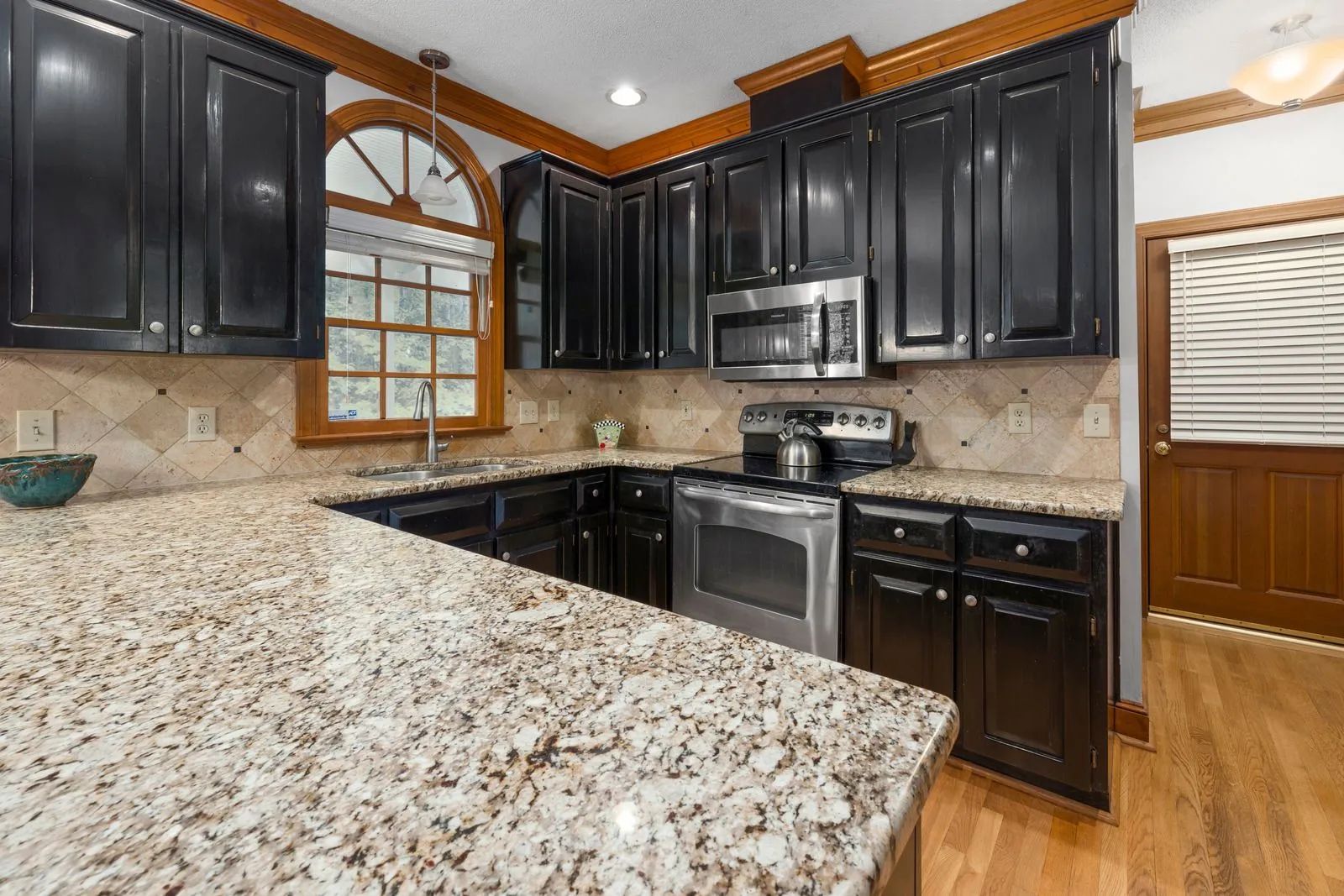
Modern kitchen with dark cabinets, granite countertops, stainless appliances, and wood flooring
August 27, 2026
Learn why seam placement is crucial for your countertop. Contact Ideal Stone Inc. for expert installation and custom designs.
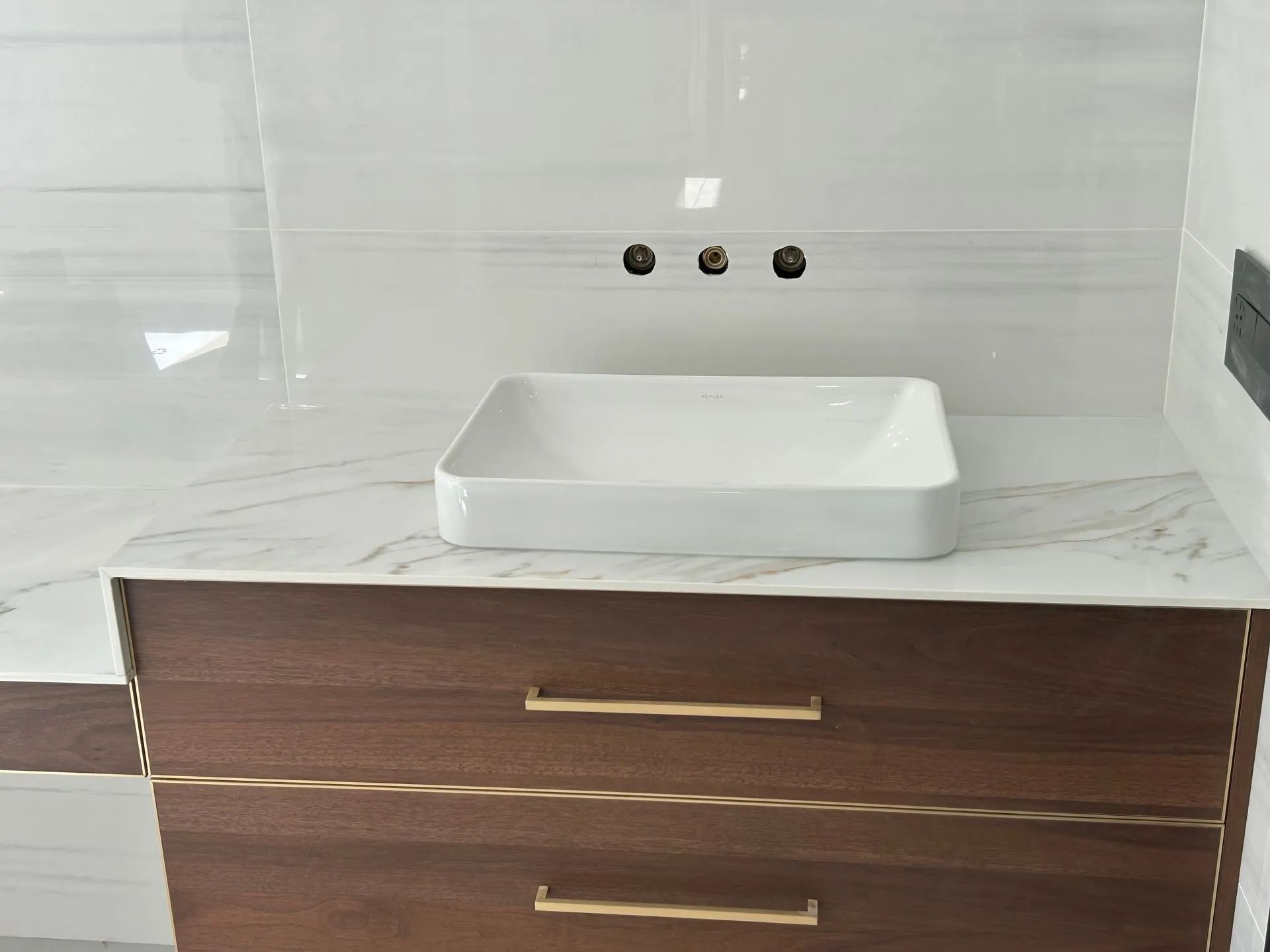
Modern bathroom vanity with white vessel sink, wall faucet, and dark wood drawers
July 6, 2026
Assuming your bathroom vanity is just a small kitchen counter? Here is why the height, depth, thickness, and sink cutout are specified differently.
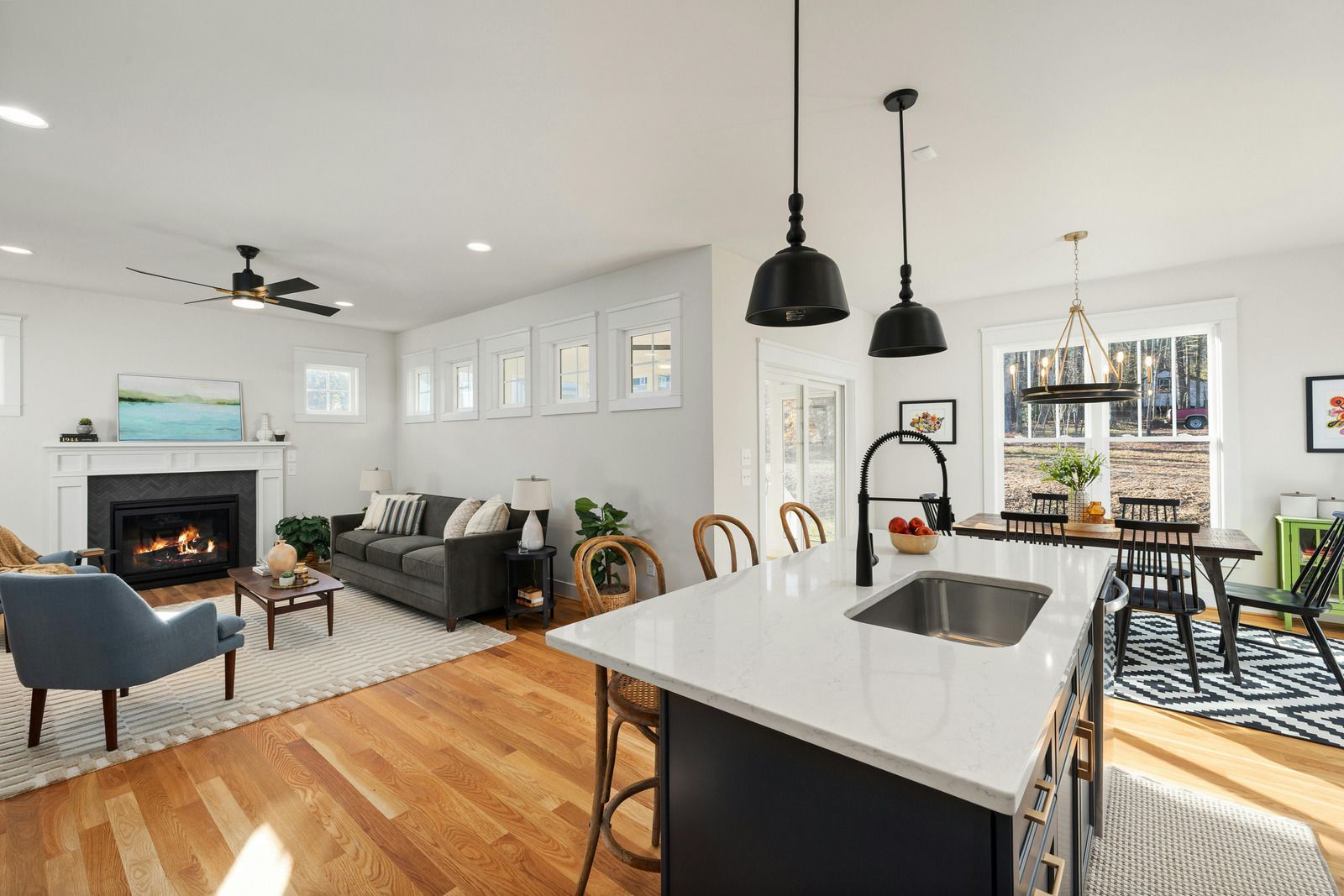
Bright open-plan living room and kitchen with gray sofas, fireplace, pendant lights, and hardwood floors.
June 15, 2026
Learn how to create flow between kitchen & living areas with expert countertop design tips. Contact us for custom solutions!
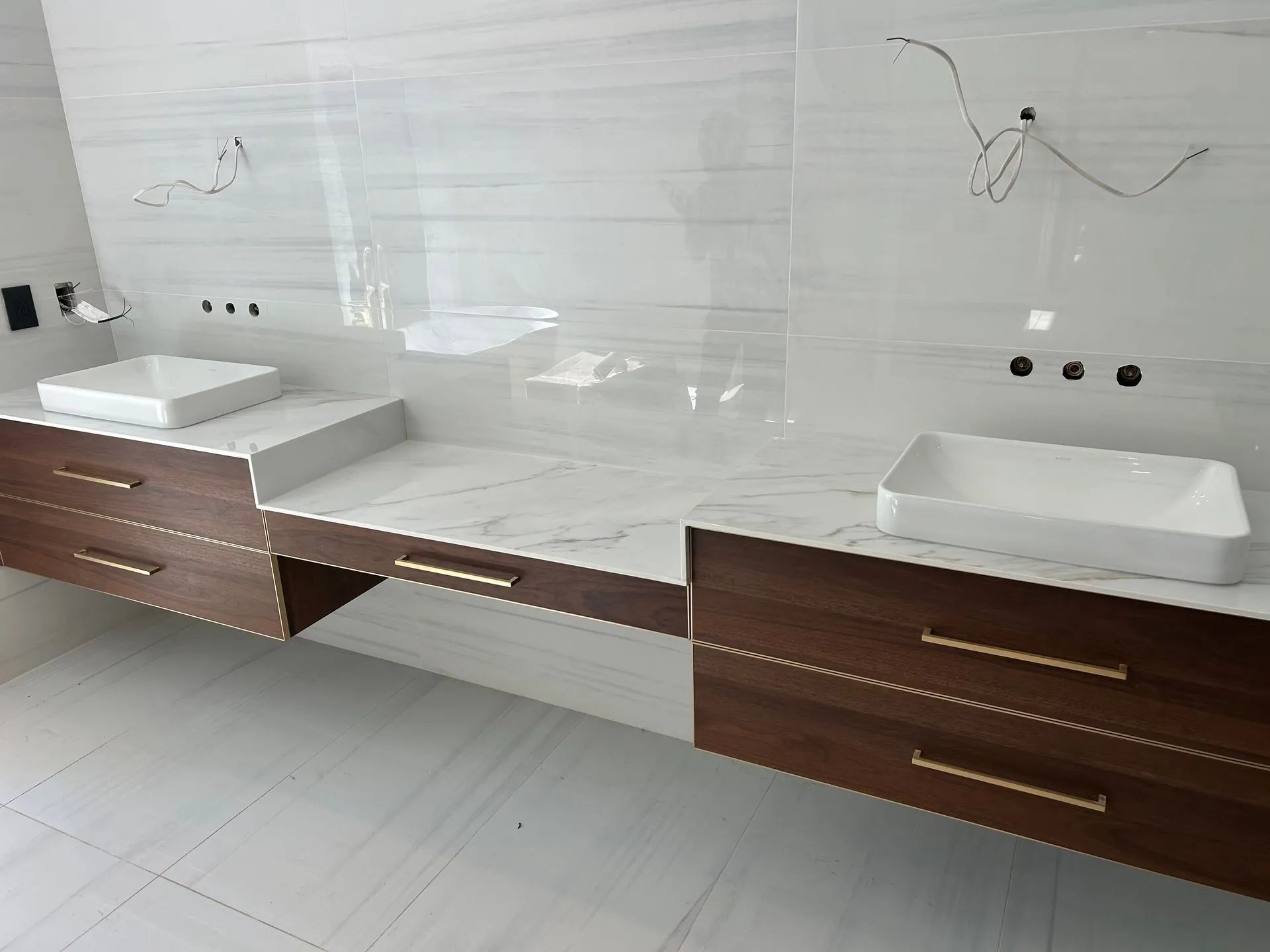
Modern double vanity with two sinks, dark wood drawers, and white marble countertop in a bathroom
May 9, 2026
Choosing the right countertop is one of the most critical decisions in both kitchen and bathroom design, yet many homeowners assume that all countertops serve the same purpose. In reality, bathroom vanity countertops and kitchen countertops are engineered to meet very different functional demands.
April 17, 2026
Designing a functional and visually appealing kitchen requires attention to details that often go unnoticed, and countertop overhang is one of them. While cabinetry, materials, and finishes usually take center stage, the dimensions of a countertop’s overhang play a critical role in usability,
A white rectangular vessel sink sits on a white marble-look countertop above a two-drawer wood vanity with gold handles.
March 21, 2026
Stone countertops have become a hallmark of modern kitchen and bathroom design, admired for their elegance, durability, and timeless appeal. From granite and marble to quartz and soapstone, these surfaces not only elevate the aesthetic of any space but also offer functionality that can withstand daily wear and tear.
White kitchen with black appliances, gray countertop, and gray wood-look flooring.
February 16, 2026
Granite countertops have long been celebrated as a hallmark of elegance and sophistication in both residential and commercial spaces. Their natural beauty, combined with exceptional durability, makes them a sought-after choice for homeowners, designers, and builders alike.
Kitchen countertop installation: White cabinets, gray granite, under-window sink space, unfinished wall with electrical boxes.
January 13, 2026
When it comes to designing or renovating a kitchen, bathroom, or commercial space, countertops play a pivotal role in both functionality and aesthetics. They are more than just surfaces for cooking, working, or displaying items—they serve as a cornerstone of a room's design,
Wooden kitchen with granite countertops, bar stools, and a view of water through sliding doors.
December 22, 2025
Commercial spaces are more than just functional environments—they are a reflection of a brand’s identity, values, and commitment to quality.
Show More